

After a long time, the world collapsed, and a nuclear war practically wiped everything out.
And although Japan wasn’t directly involved in the conflict, waves of refugees, a devastating virus, and, to top it all off, an earthquake extinguished any remaining hope.
The population dwindled considerably, and the island essentially regressed to a time of barbarism and division, where three factions controlled the inhabitants through terror.
Decades later, much of the knowledge has been lost. On her wedding day, Aoteru sees Saki dressed as a Western bride and speaks to her about its religious significance.
Despite this, the bride knows what she wants and doesn’t care what Aoteru says. Later, at the reception, the young man tries to explain to his father-in-law, who smiles and asks him to take care of his daughter.
Aoteru had the opportunity to read many books thanks to his father-in-law, who ran the town library.
Aoteru tells Saki that he has done what was right to give her a peaceful life, but Saki believes that if he put his mind to it, Aoteru could do more, even unify the Japanese territory with his intelligence and knowledge.
One day, a high-ranking officer arrives to the village and immediately imposes his authority through terror.
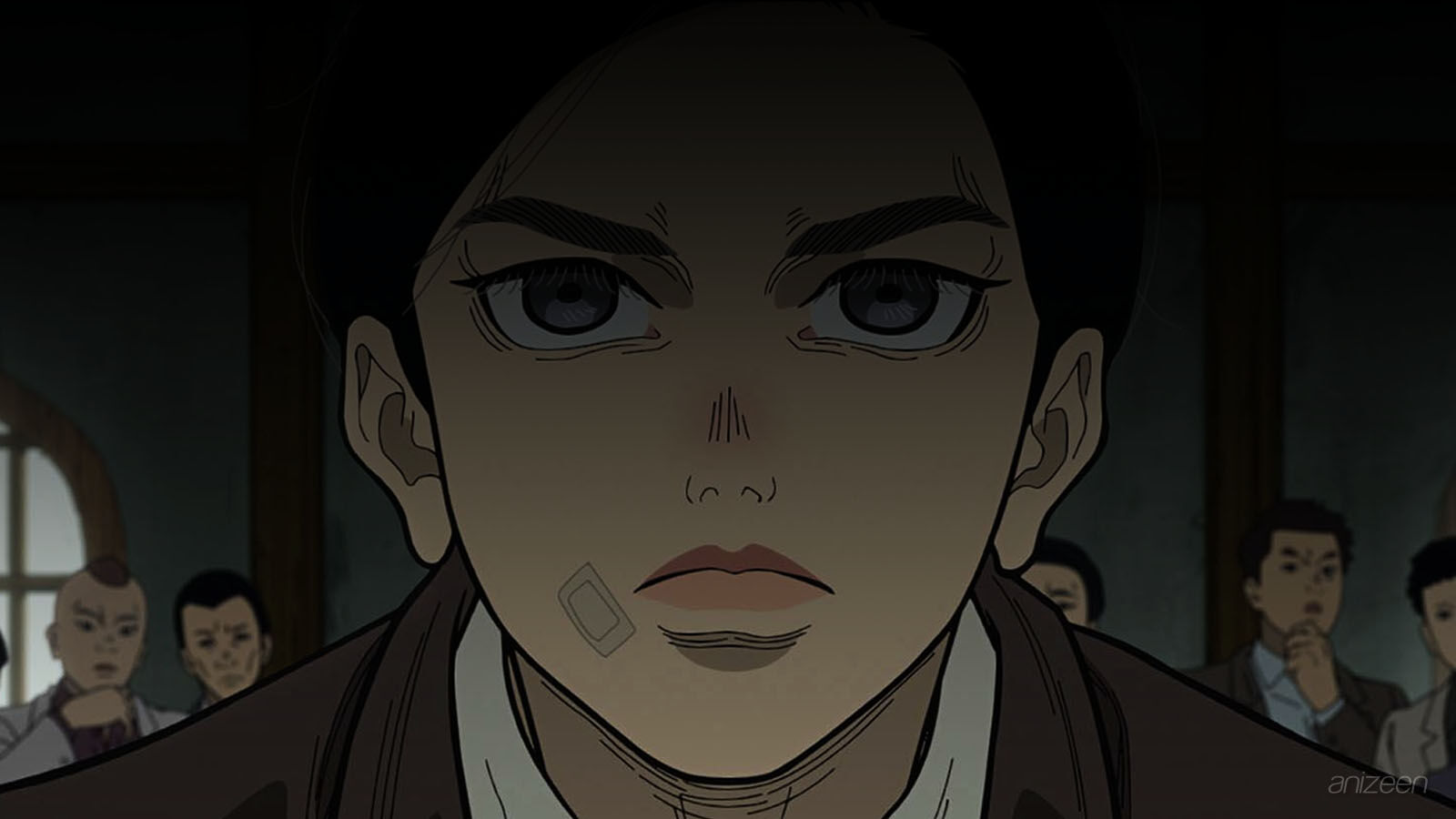
When Saki confronts one of his subordinates, Aoteru remains silent, watching as his wife defends her ideals.
Proud, they retire to sleep, but the next morning Aoteru wakes to find the high-ranking officer handing him his wife’s head in a box.
Aoteru doesn’t let rage get the better of him and, strangely calm, asks what the charges were. He finally understands that what Saki wanted from him was right, and he decides to embark on his journey to try to change the world.
(日本三國)